

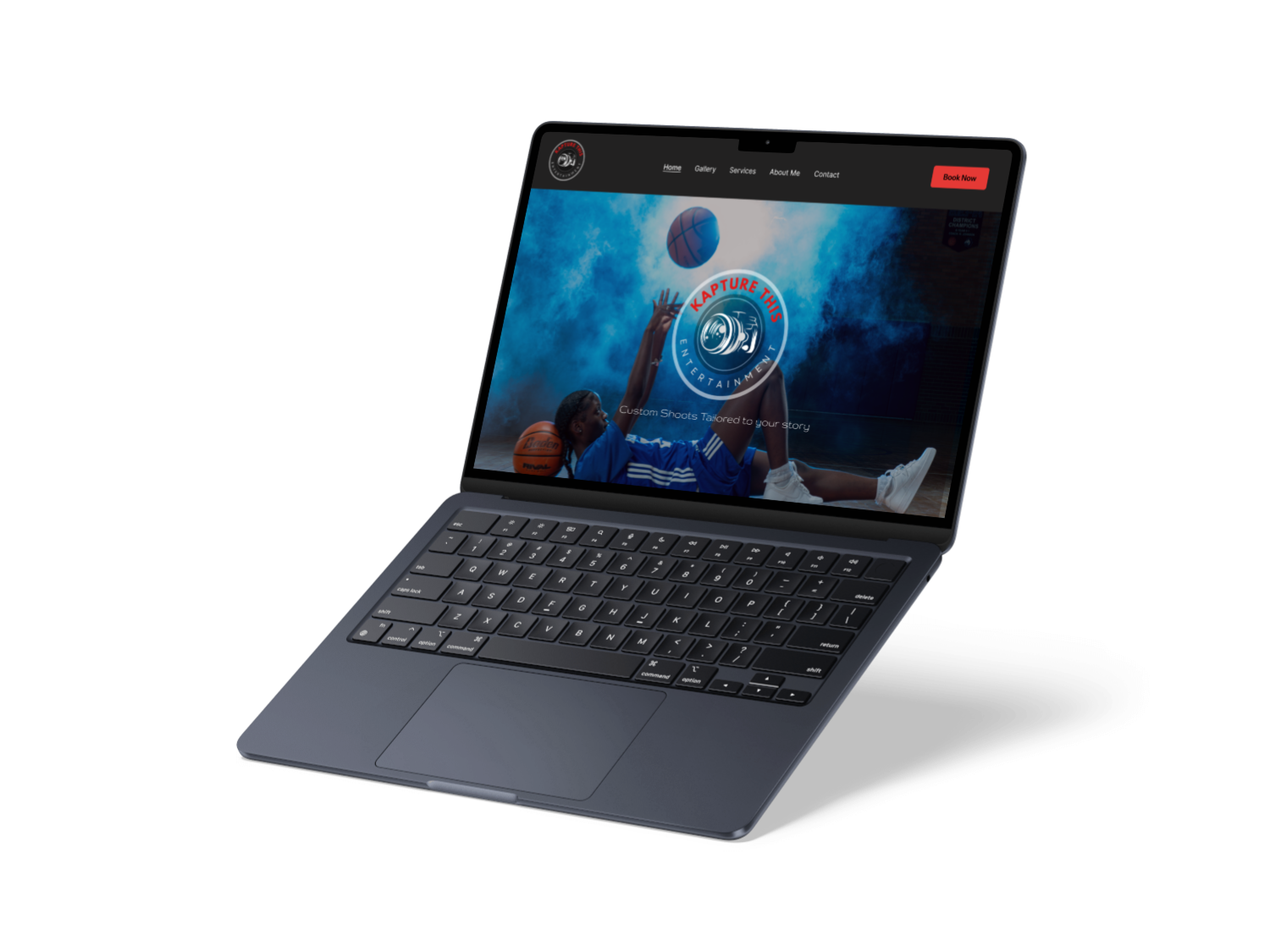
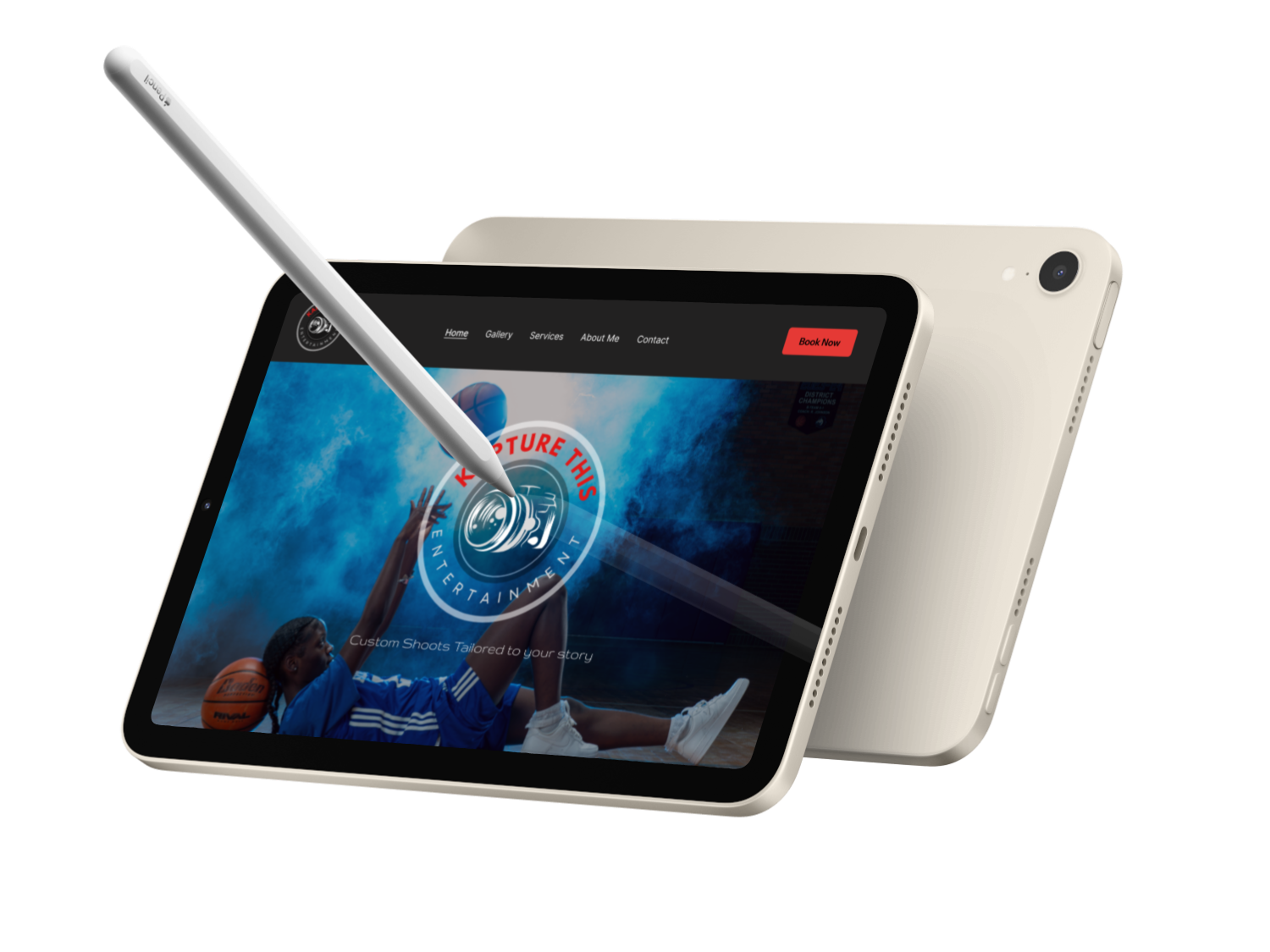
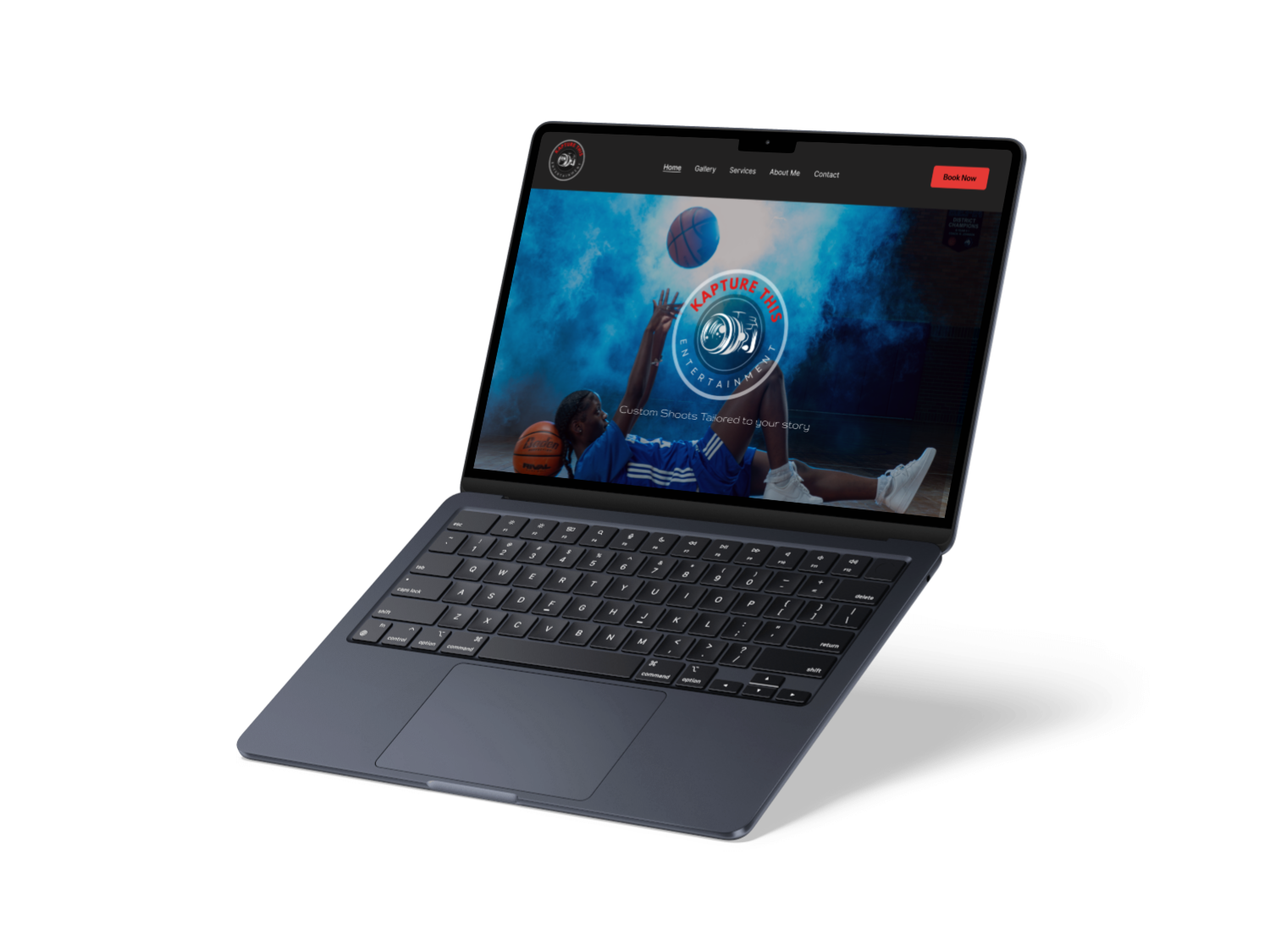
Overview
Role:
Timeline:
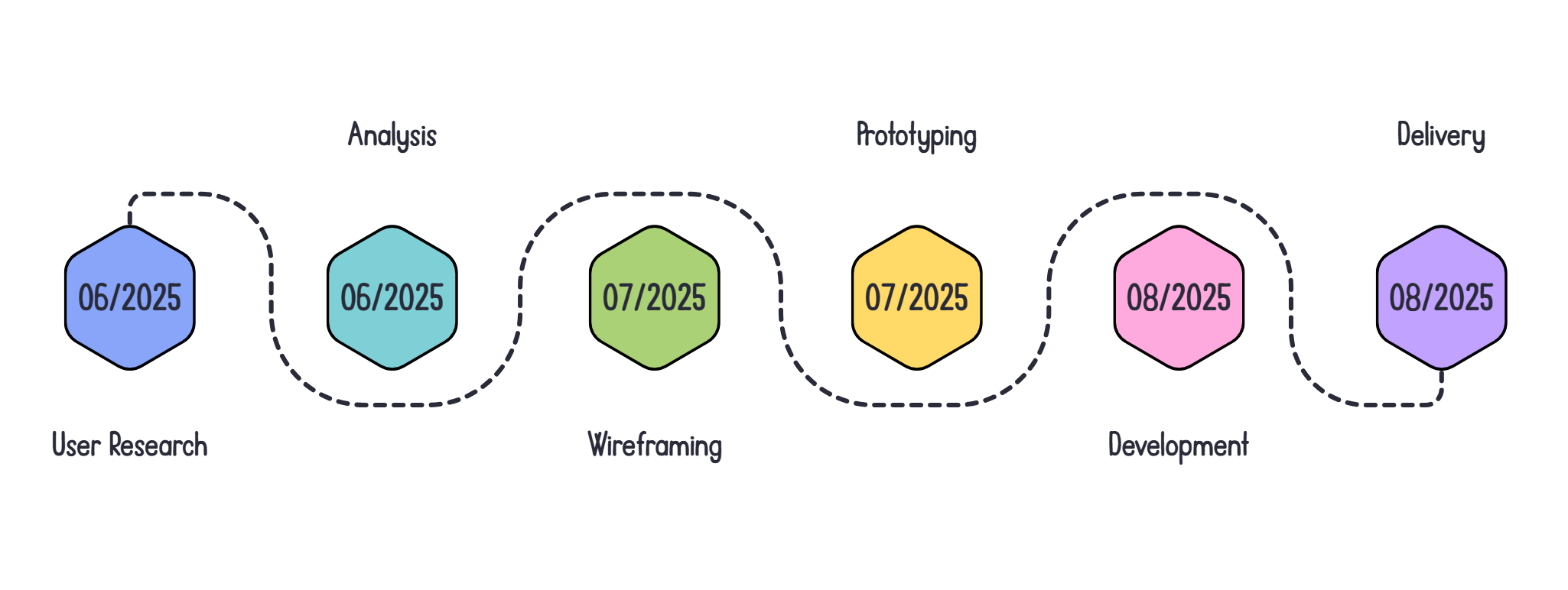
June 2025 - August 2025
Teammates:
Figma – UI design, components, design system, and prototype
FigJam – Brainstorming, user flows, IA, and collaboration
Canva – Visual assets and supporting graphics
Google Forms – User surveys and research data collection
Google Slides – Research synthesis and project presentation
Zoom – Moderated usability testing and user interviews
Teammates:
Bianca Walker and Shilpa Francis
Problem:
Sports photographers lack a simple platform to showcase their work, explain services, display pricing, and allow easy booking. Clients struggle to find portfolios, trust the photographer, and book sessions, especially on mobile devices.
Goal
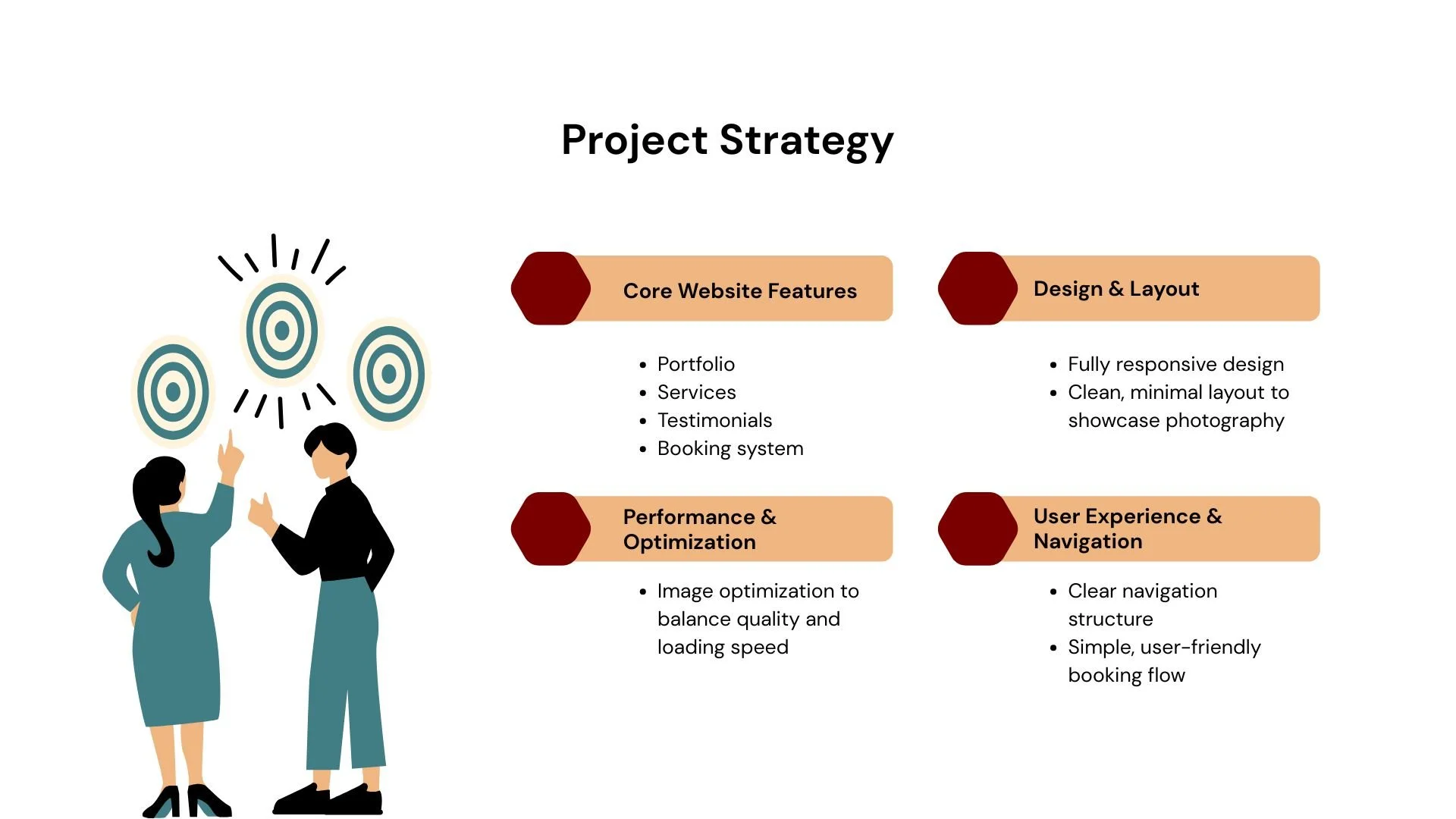
Users want to quickly view the photographer’s portfolio, understand services and pricing, trust their work through testimonials, and easily book a session on any device.
Client:
Charles, a photographer based in Houston, TX
Business Goal
Create a fast, responsive website that highlights the portfolio, builds credibility, and increases bookings through a clear and easy scheduling experience.
User research, User flow, Information Architecture, Wireframing, Interactive Prototype, Usability testing
Timeline

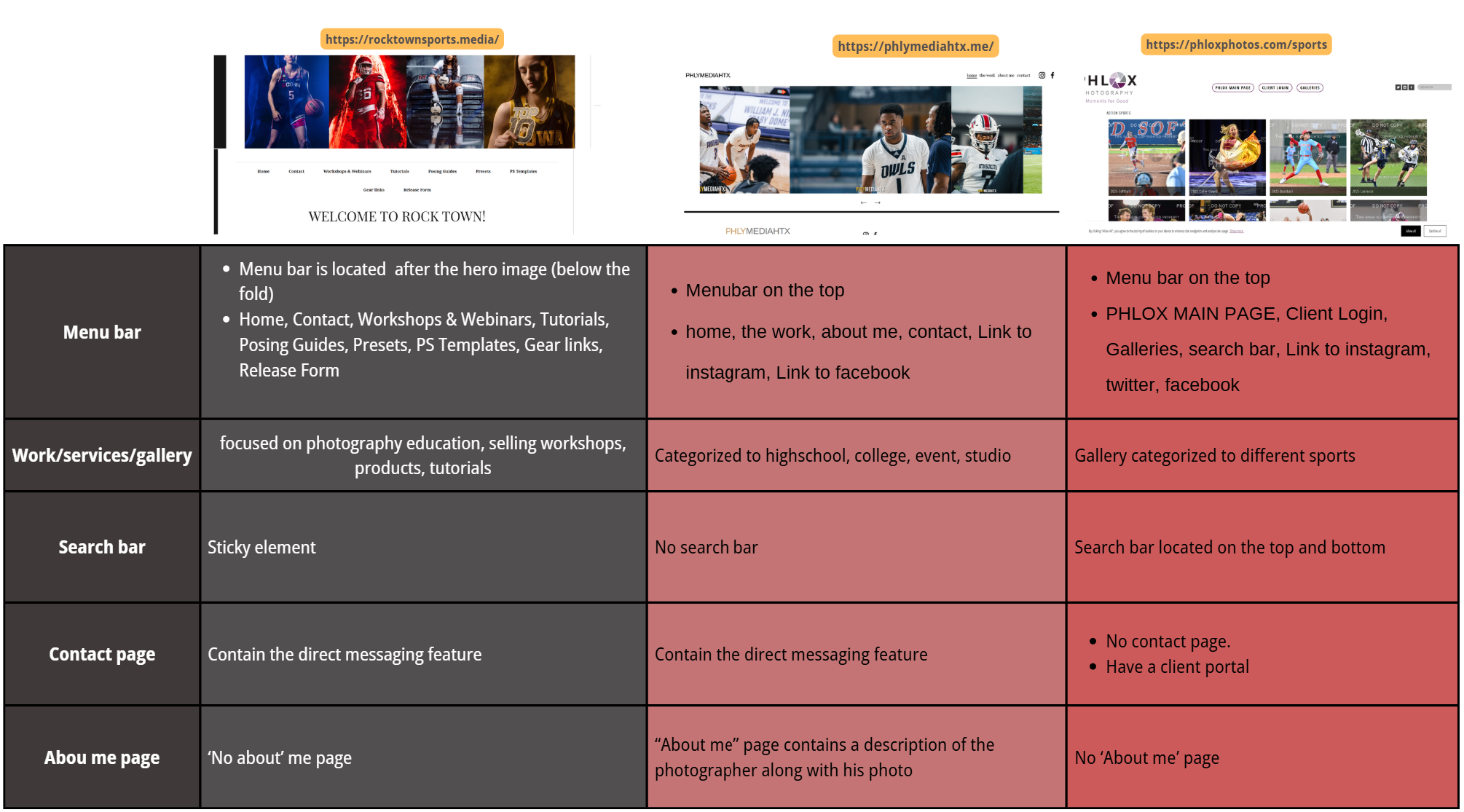
User Research and Competitive Analysis
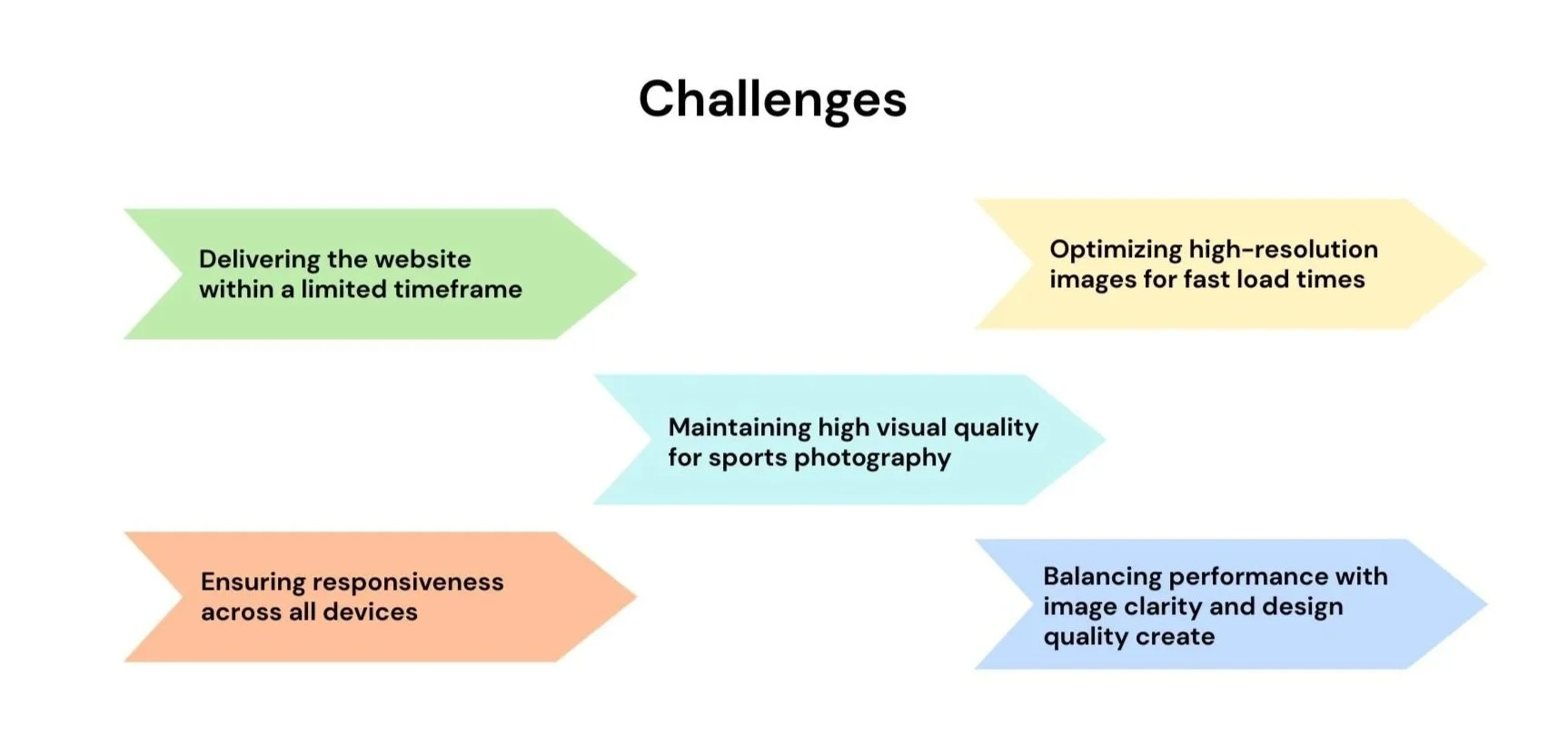
User research was conducted using short online surveys to quickly gather insights within our limited timeframe. The survey focused on user behavior, trust factors, performance expectations, booking preferences, and factors that help the user make a decision.
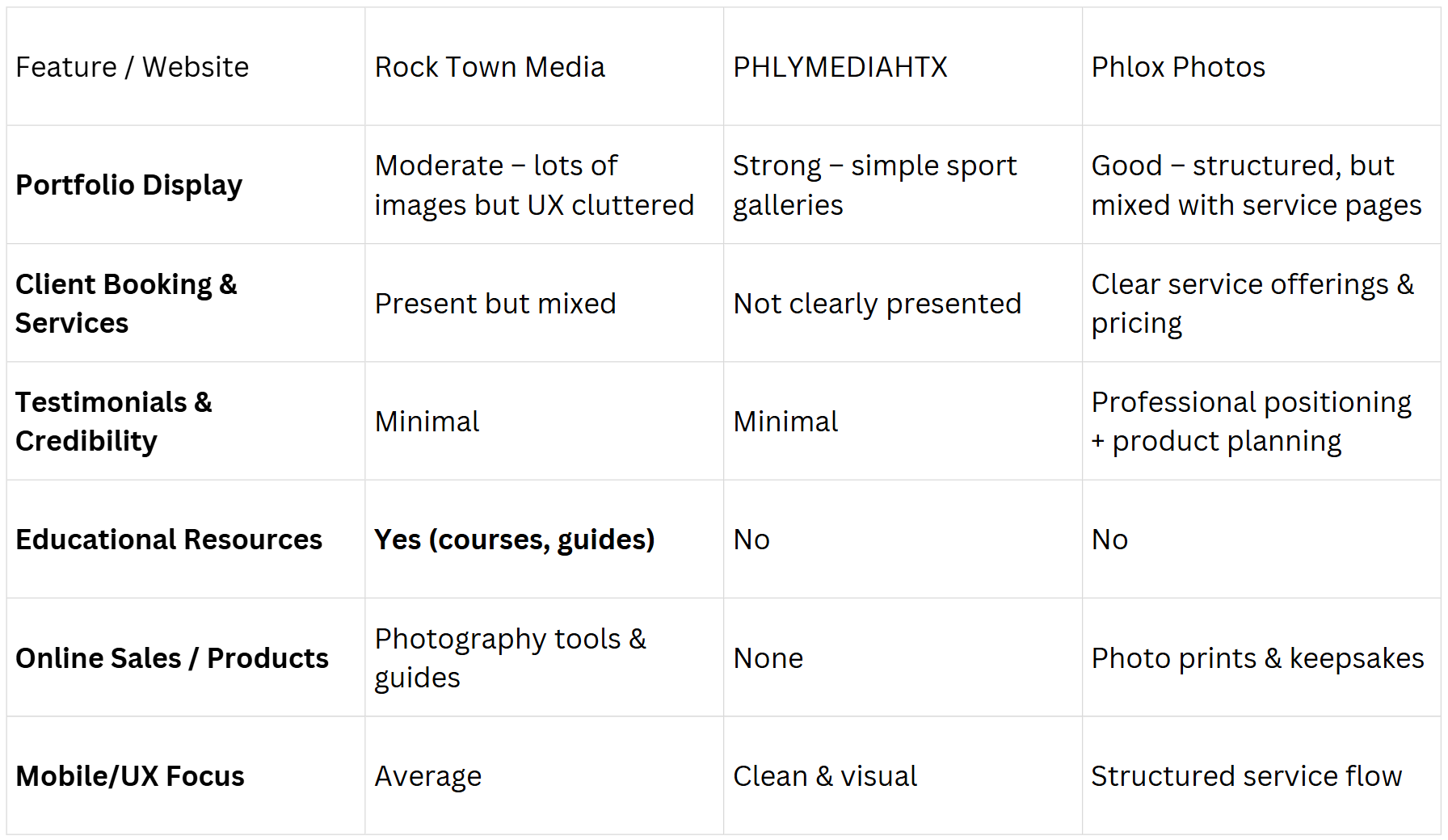
Insights from User research and competitive analysis
Most users access sports photography websites on mobile devices, making responsive design essential.
Users view the portfolio first to judge photography quality.
Fast-loading images are critical for keeping users engaged.
Websites with clear services, pricing, and booking flows convert better than gallery-only sites.
Many competitors lack clear next steps, causing users to drop off without booking.
Trust elements like testimonials and photographer details are limited but increase booking confidence.
Clear service information helps photographers stand out beyond visuals alone.
Personas

Name: Ken Carter
Age: 35
Role: School Coach
Bio:
Ken is a 35-year-old school sports coach who manages multiple teams and organizes events and matches throughout the year. With a busy schedule, Alex needs quick access to reliable photographers to capture team and individual moments. Efficiency, trust, and clear service offerings are essential when choosing a photographer.
Goals:
Need help deciding the service
Check portfolio quality before booking
Book a photographer easily
Frustrations:
Slow-loading images
Unclear services or pricing
Complicated booking forms and unclear contact information
Devices:
Laptop

Name: Sarah Lee
Age: 22–30
Role: Athlete or Sports Brand Representative
Bio:
Sarah is a 25-year-old professional athlete and brand representative who frequently requires sports photography for personal branding, sponsorship campaigns, and social media promotion. Jamie values visually striking images, fast access to portfolios, and a seamless booking process, with clear pricing and services.
Goals:
View high-quality action shots
Compare styles between photographers
Book sessions quickly online
Frustrations:
Heavy galleries that load slowly
Lack of service info or pricing and reviews
Confusing navigation
Devices:
Mobile
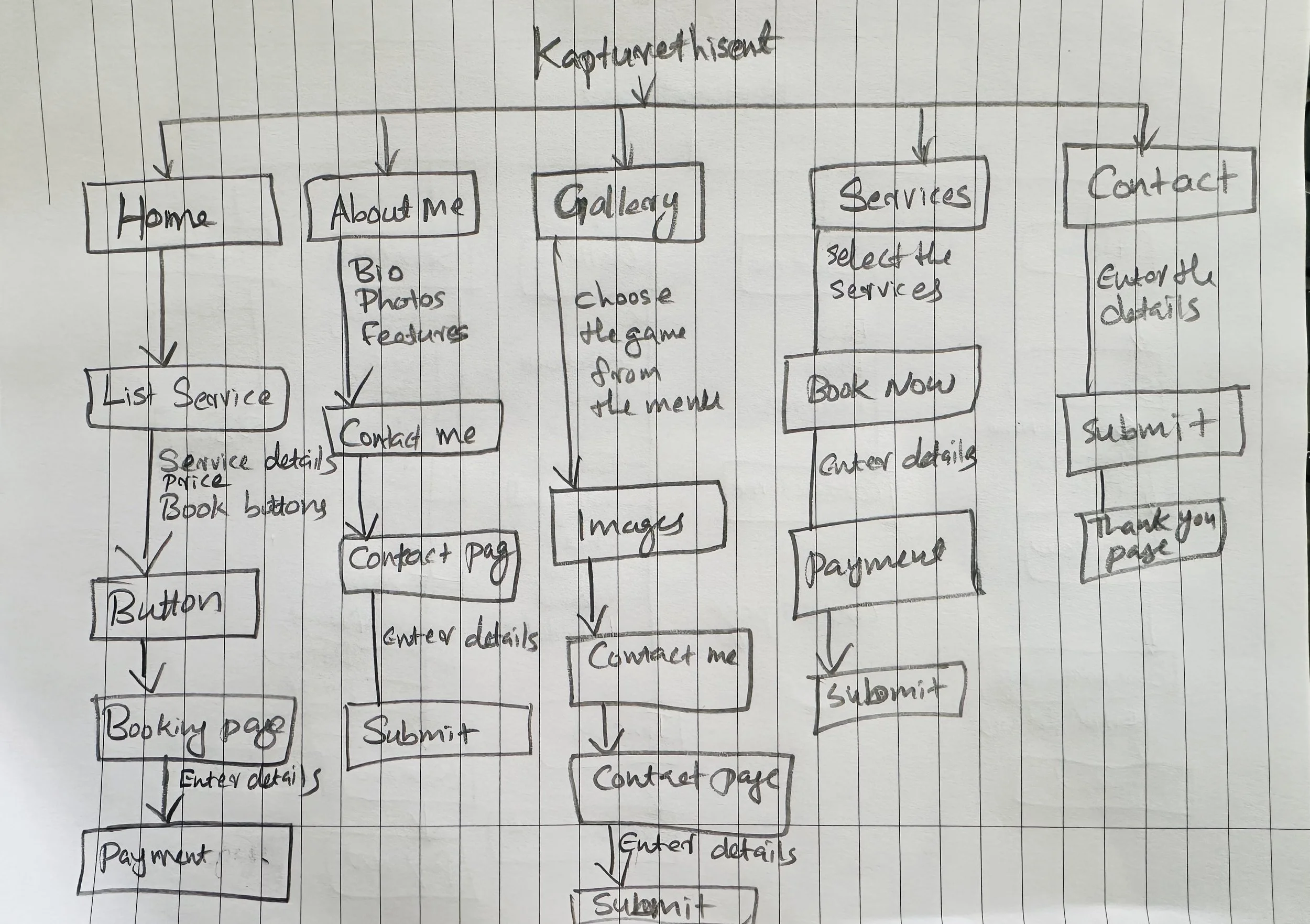
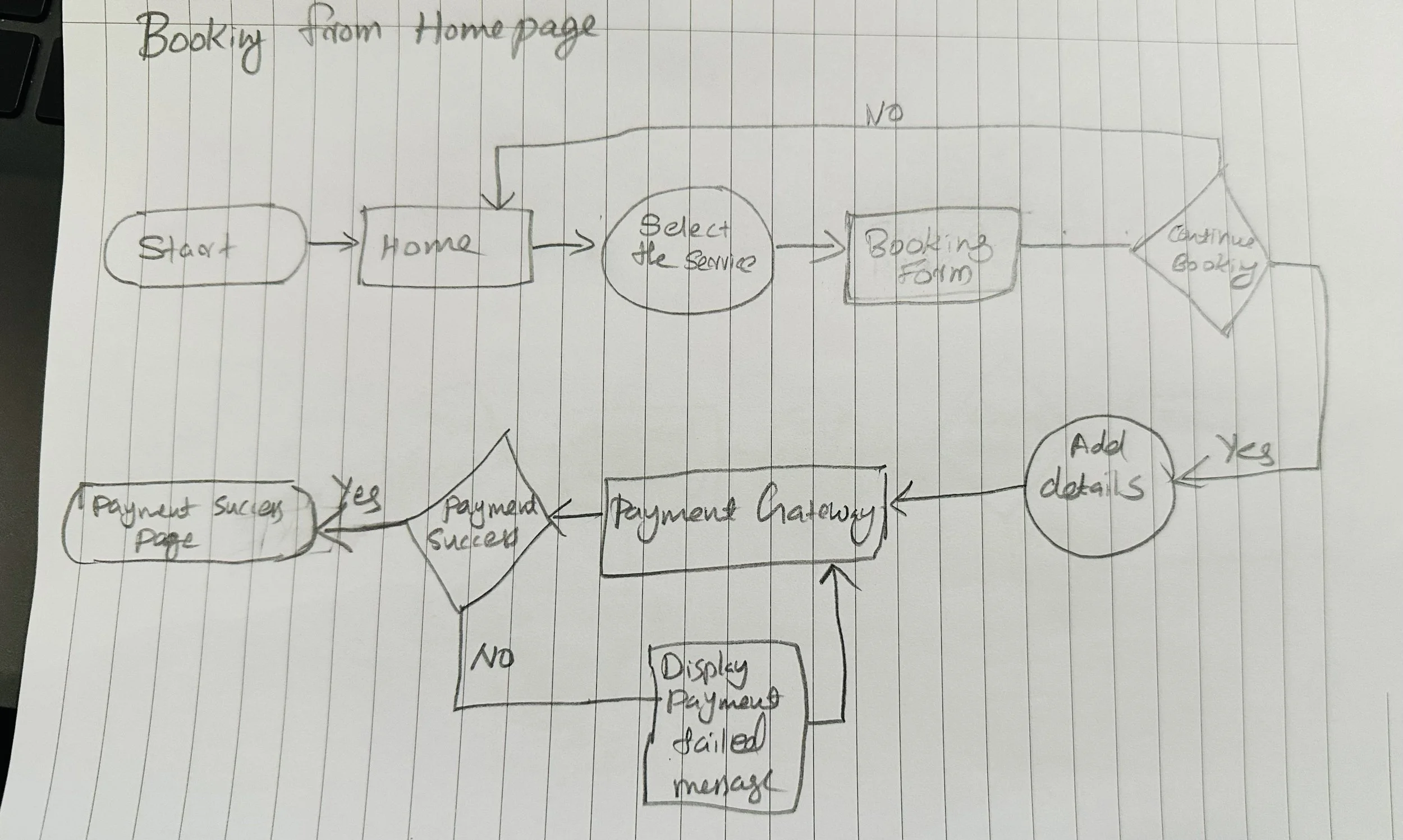
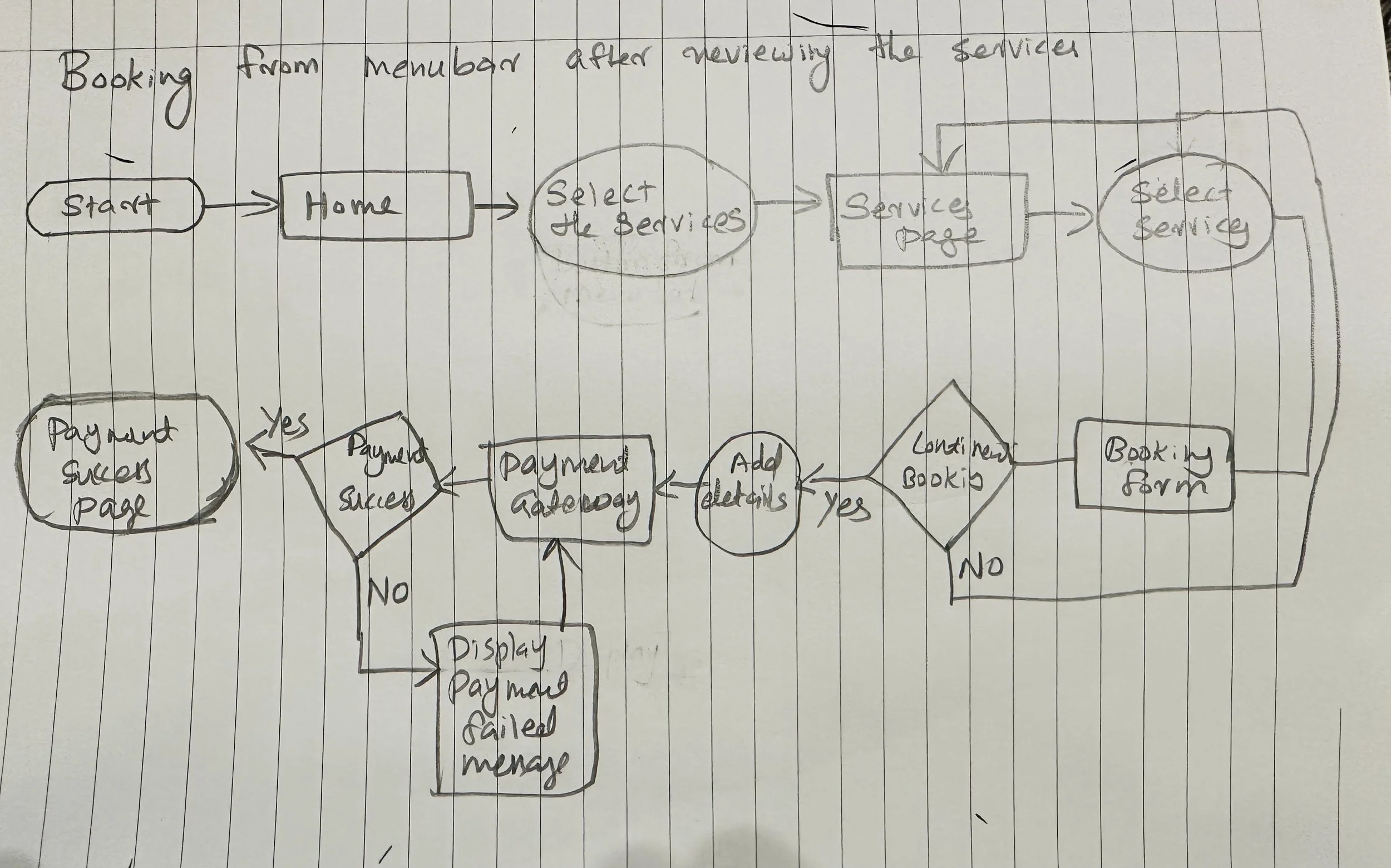
Fast-Track IA & User Flow
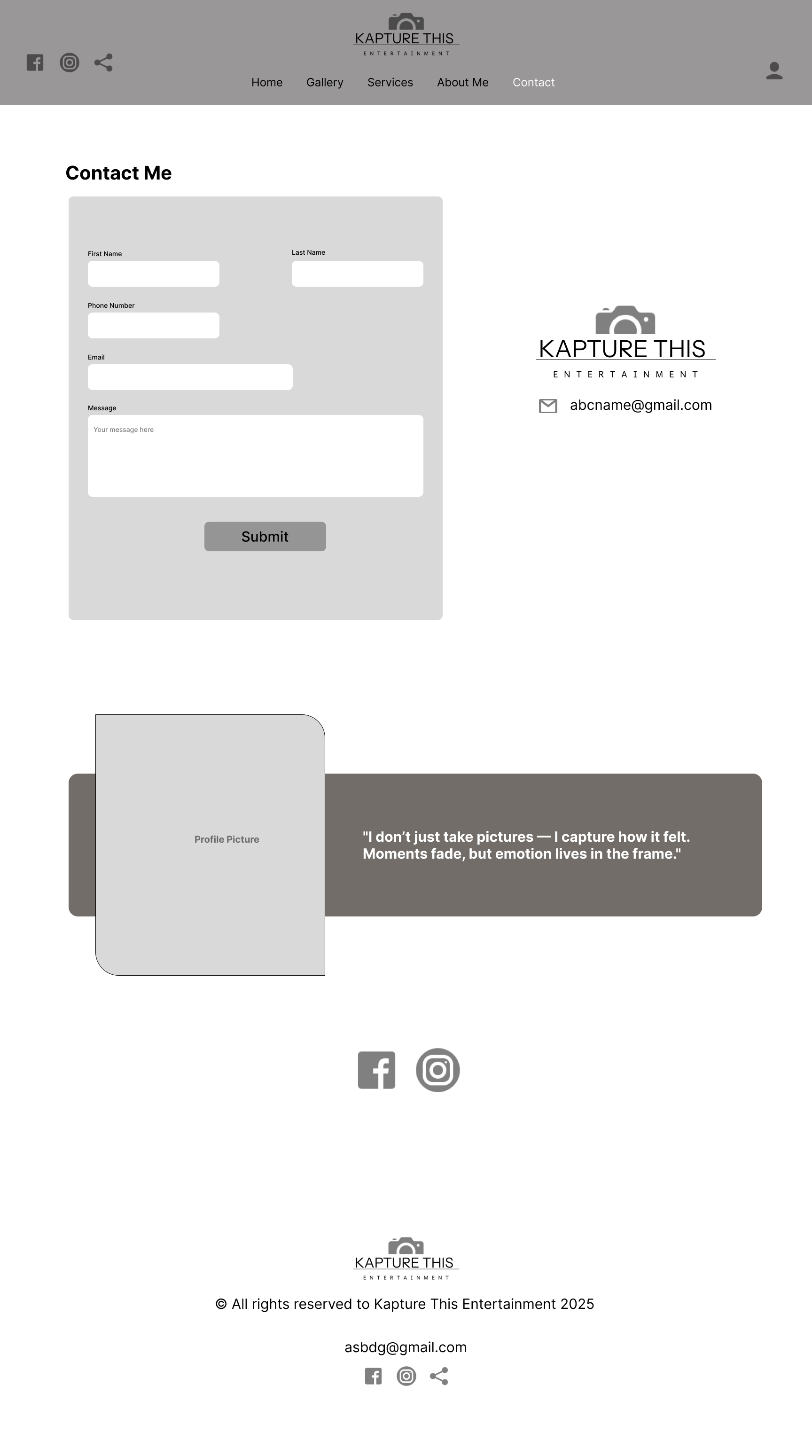
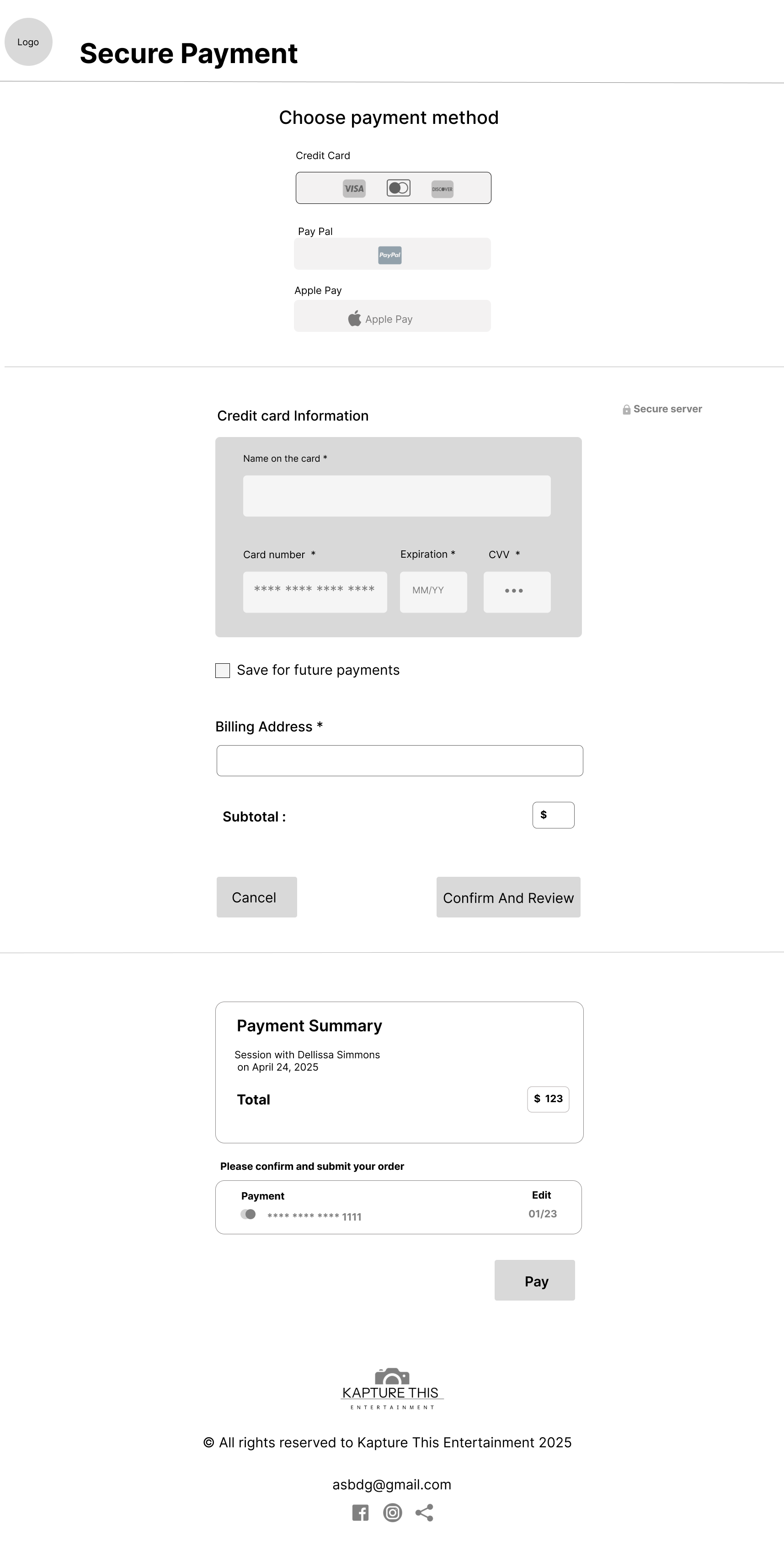
Low-Fidelity Wireframes
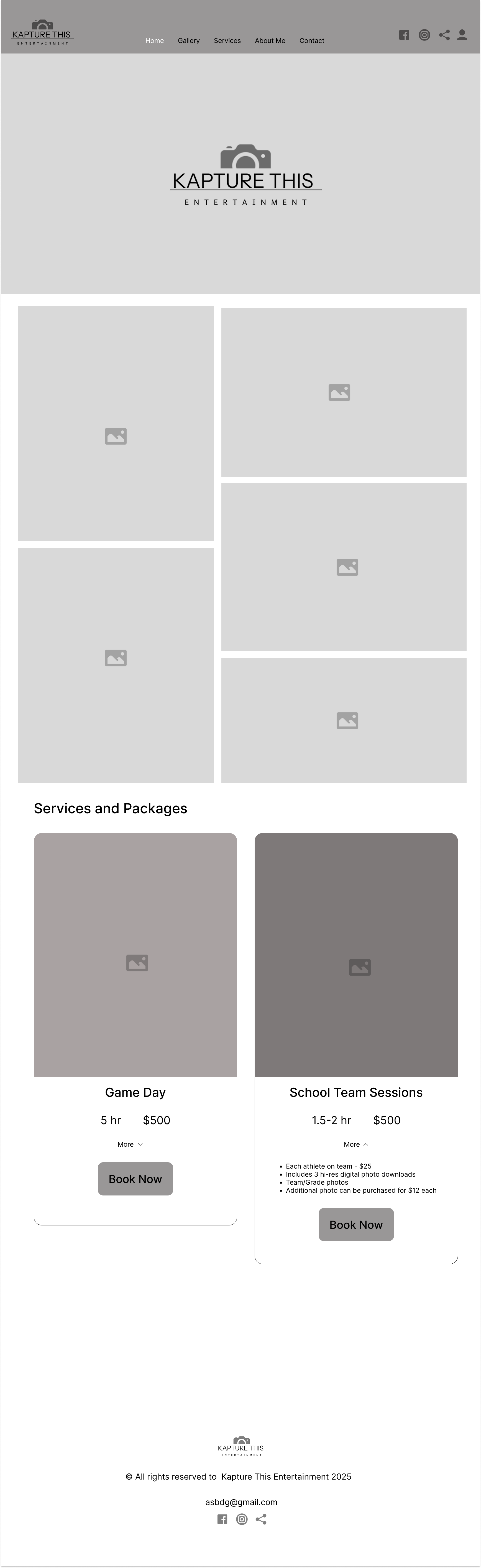
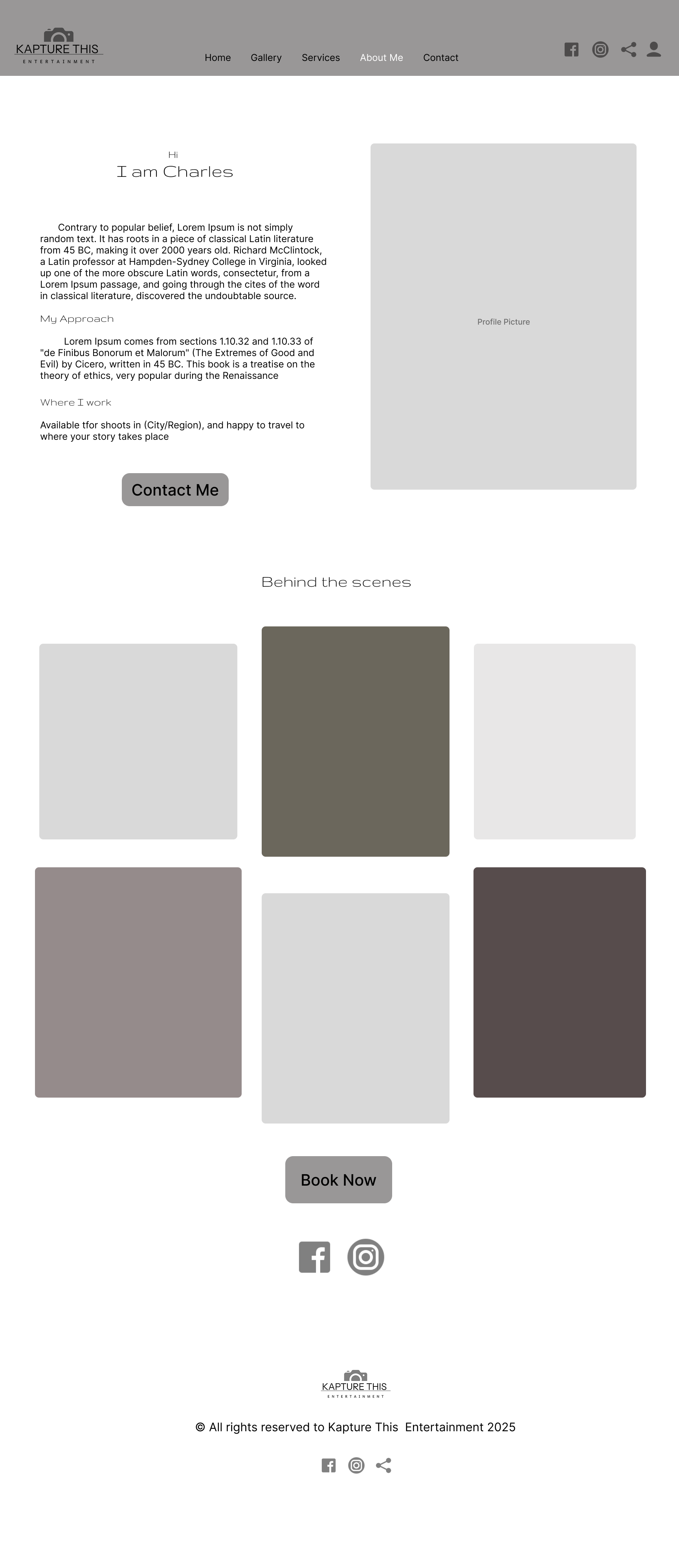
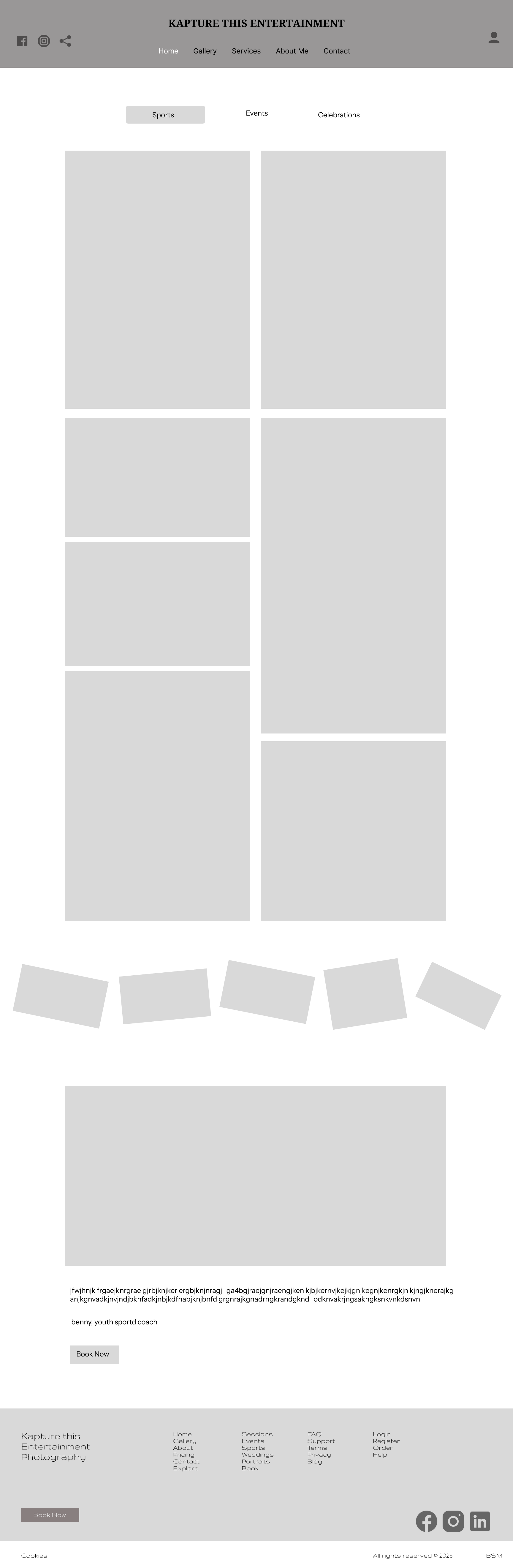
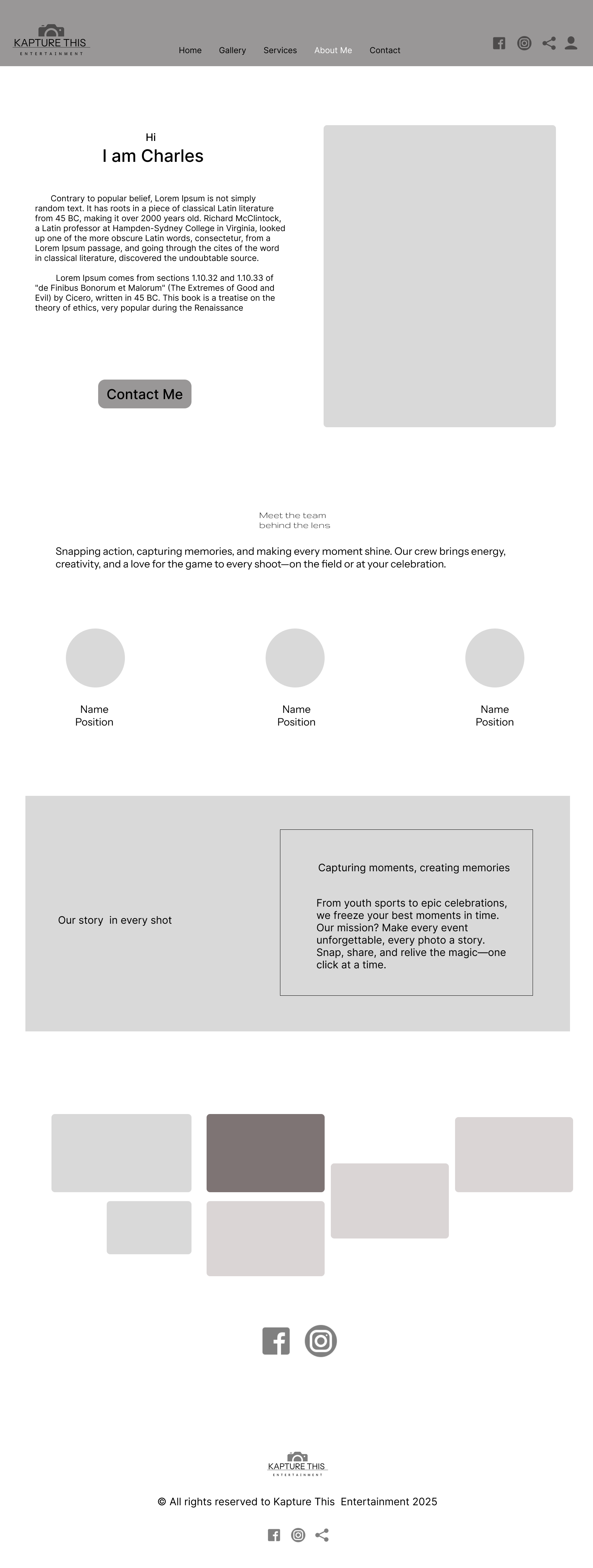
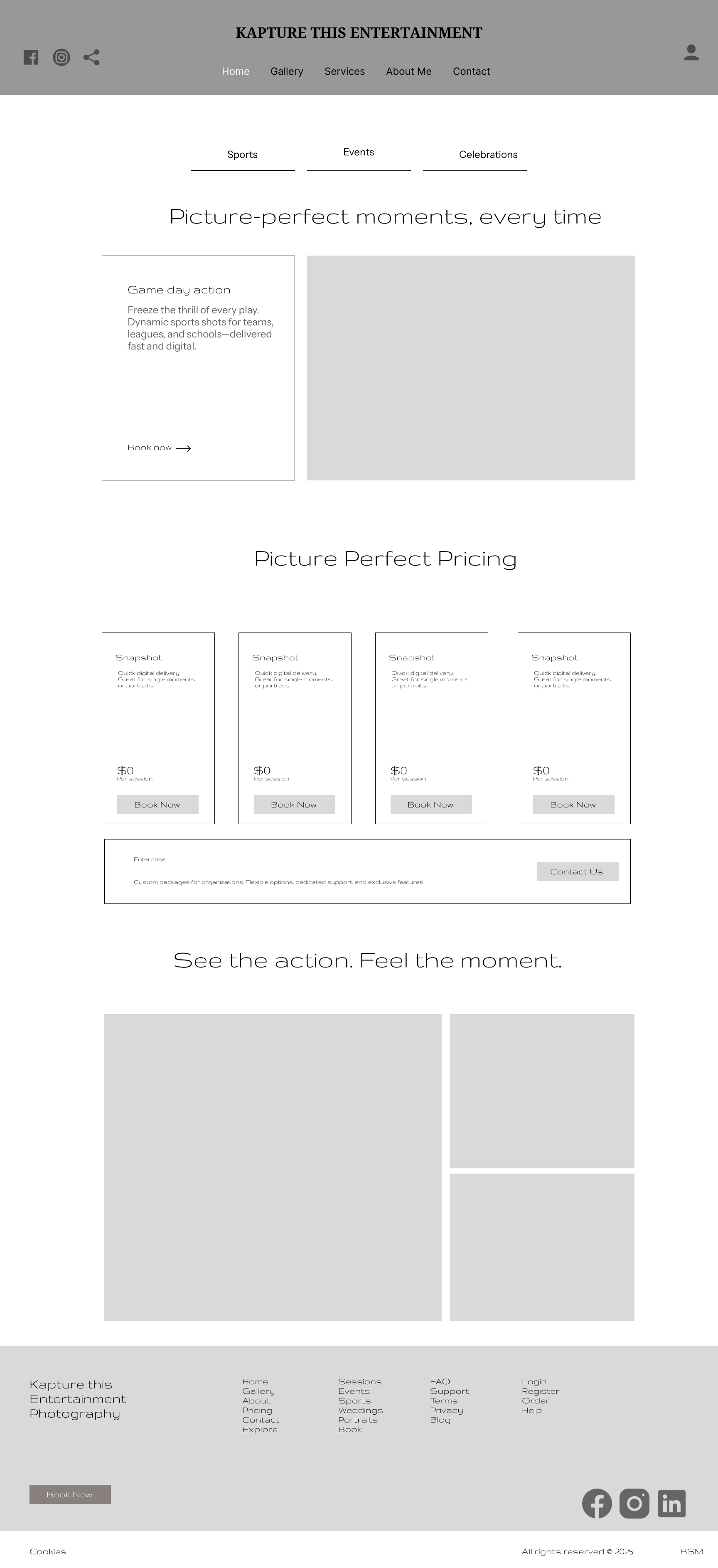
To ensure the website was adaptable across various screen sizes, I started by designing for the largest screen (desktop) and progressively scaled down to smaller screens (phones). This approach allowed me to first establish the layout, design elements, and brand identity on a larger scale, making it easier to translate them effectively into smaller formats.
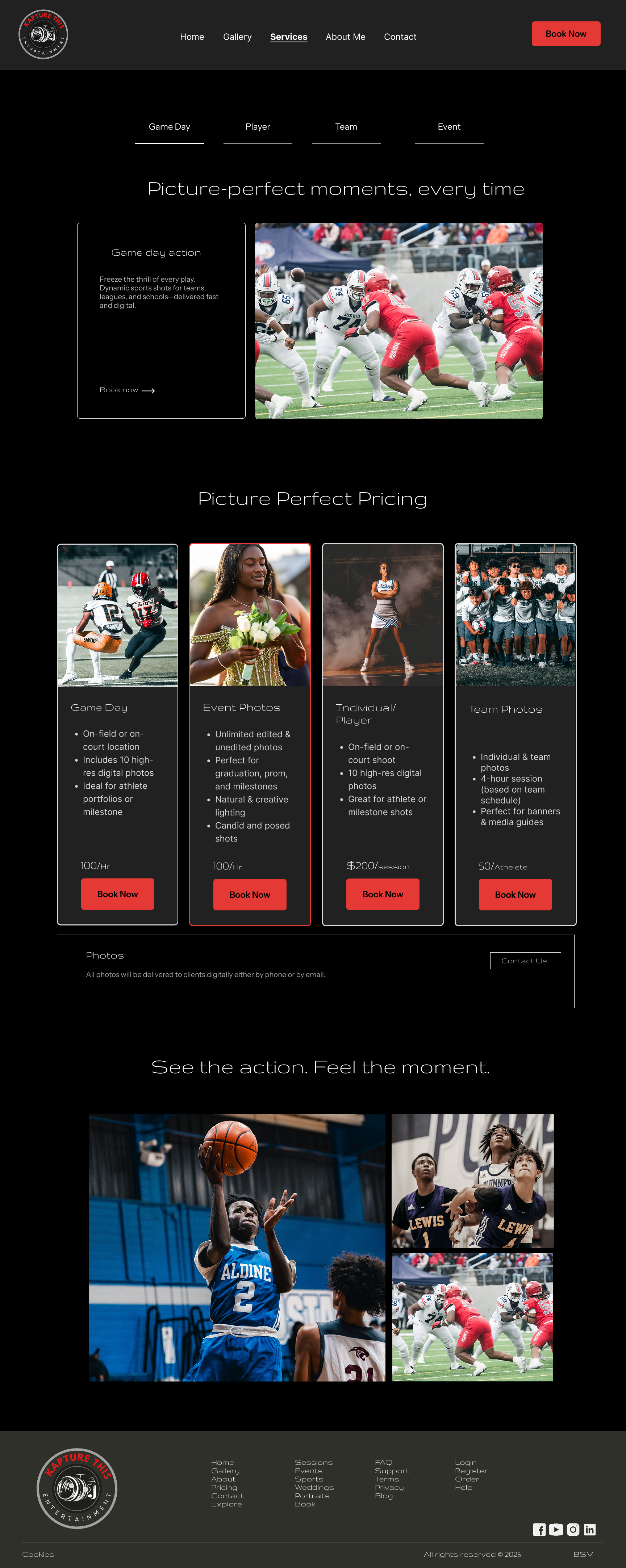
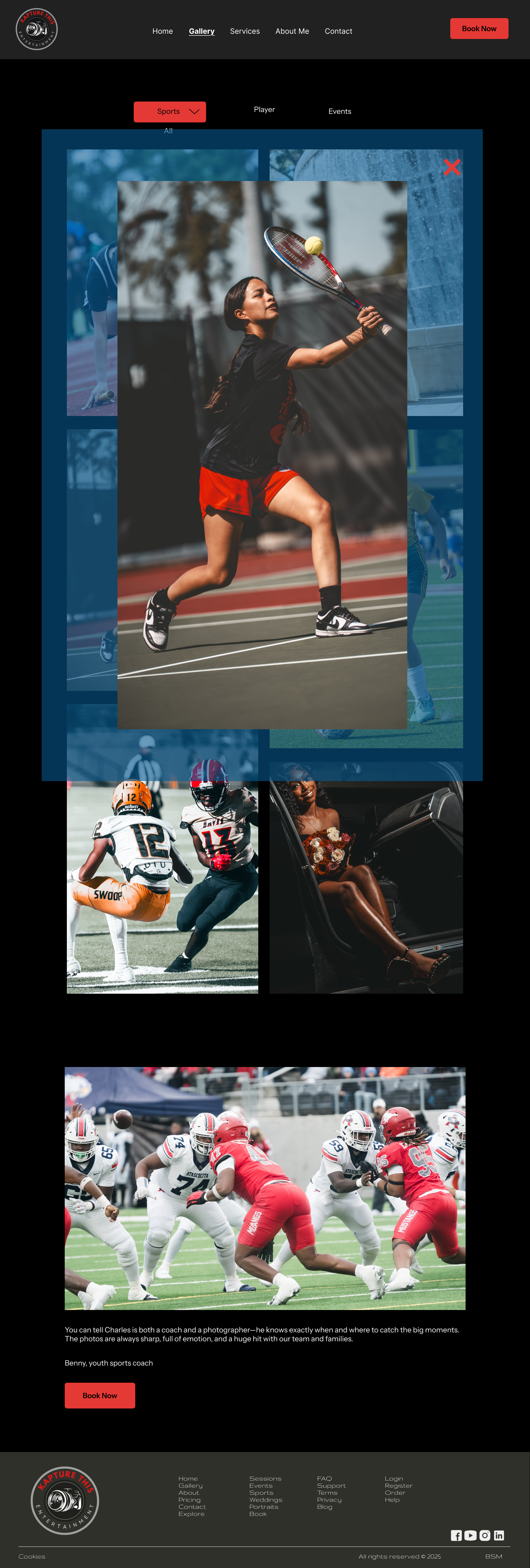
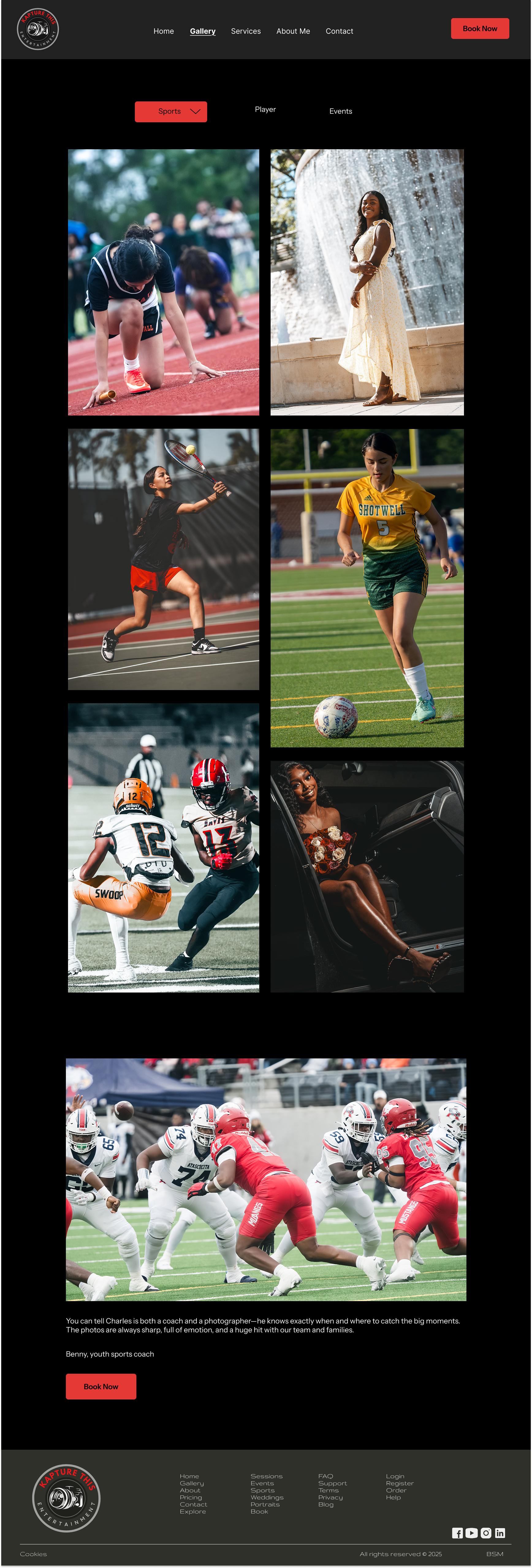
Design
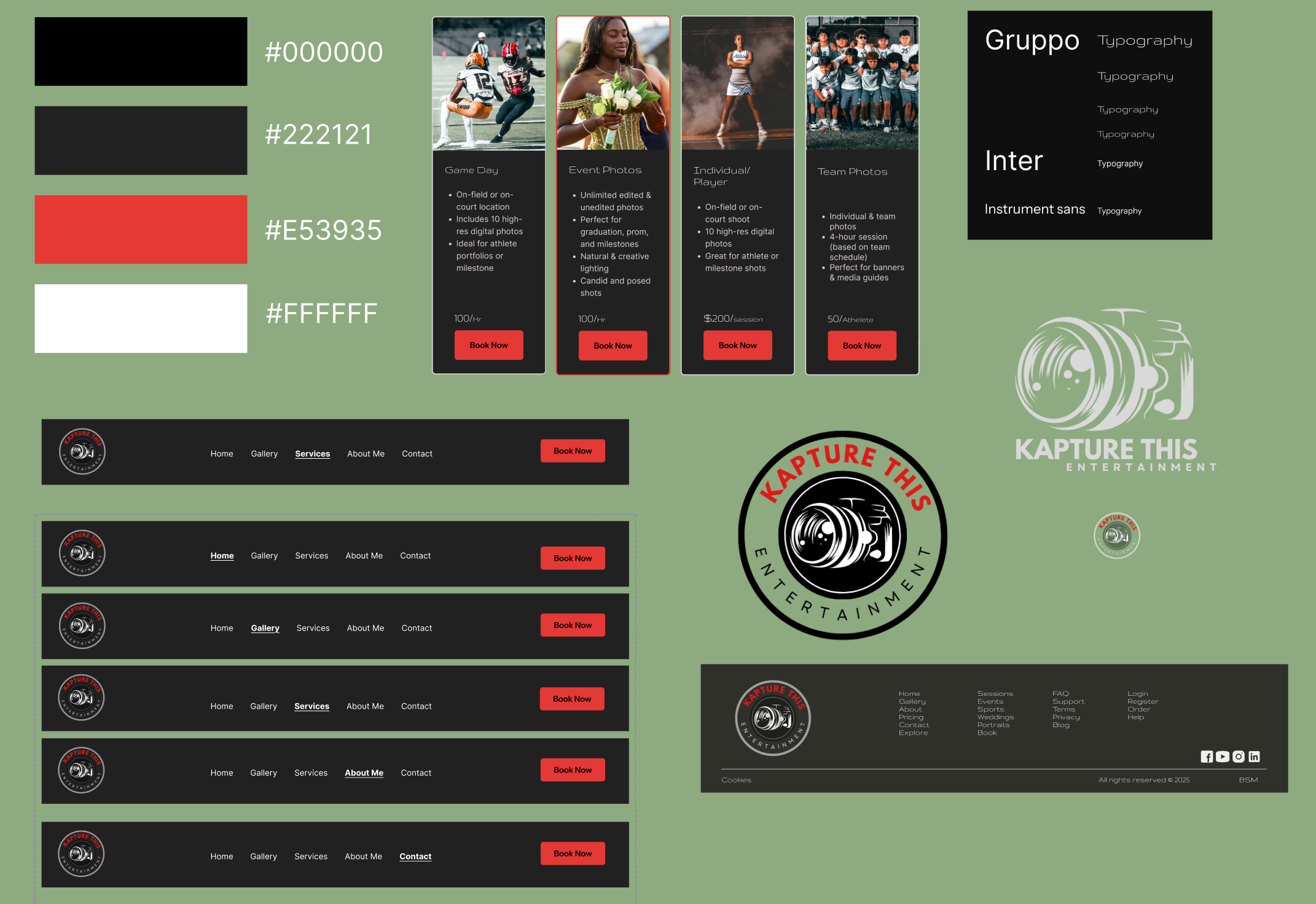
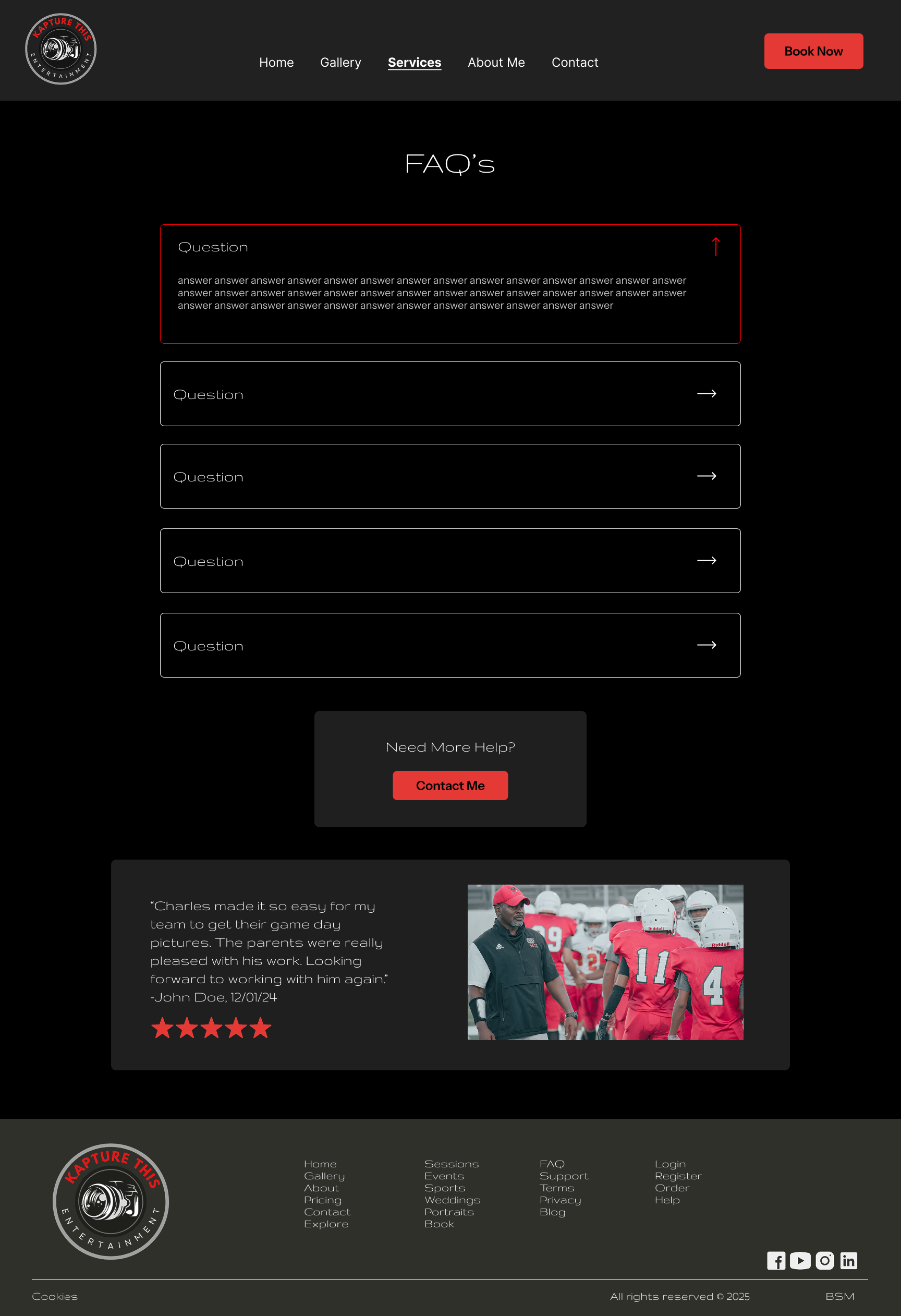
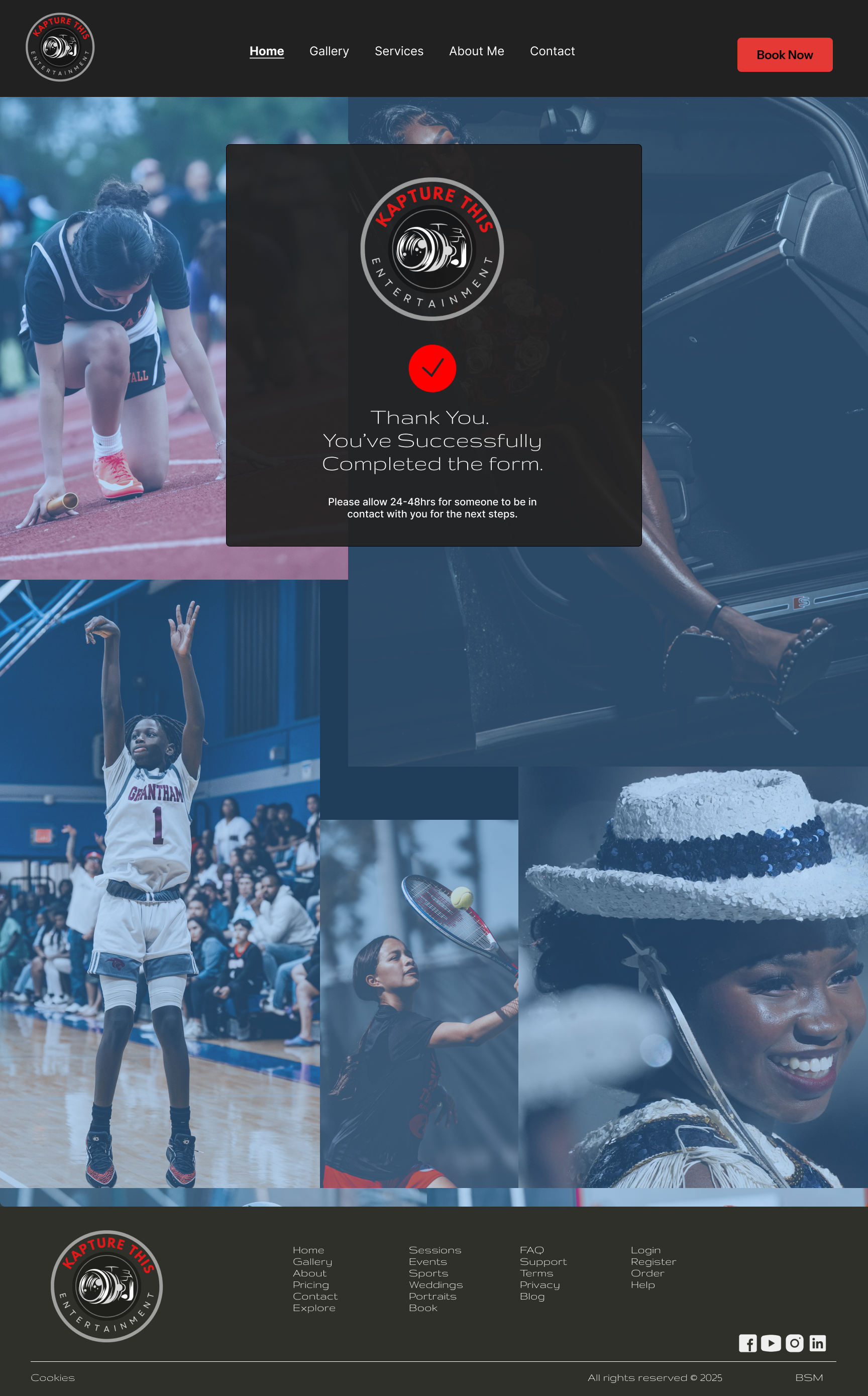
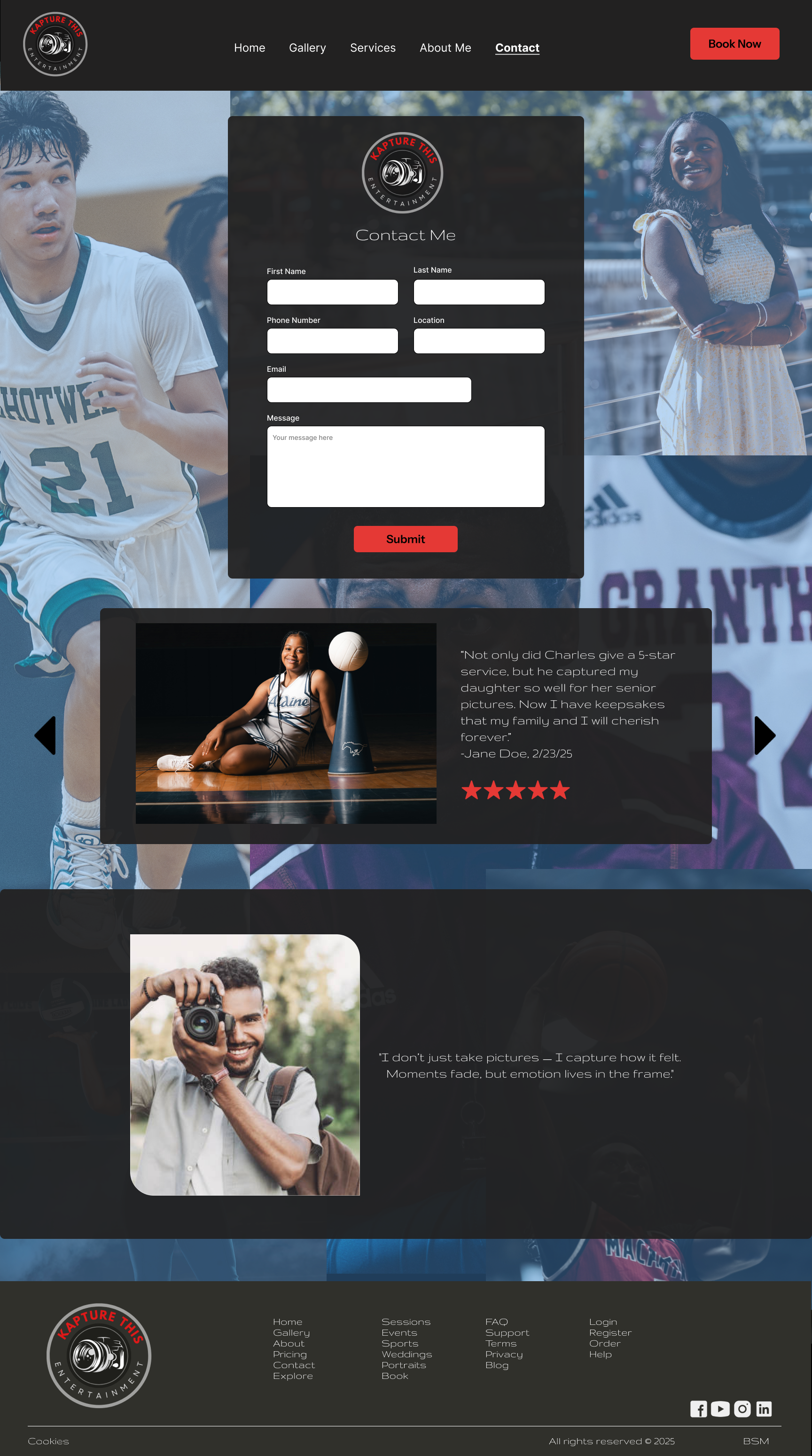
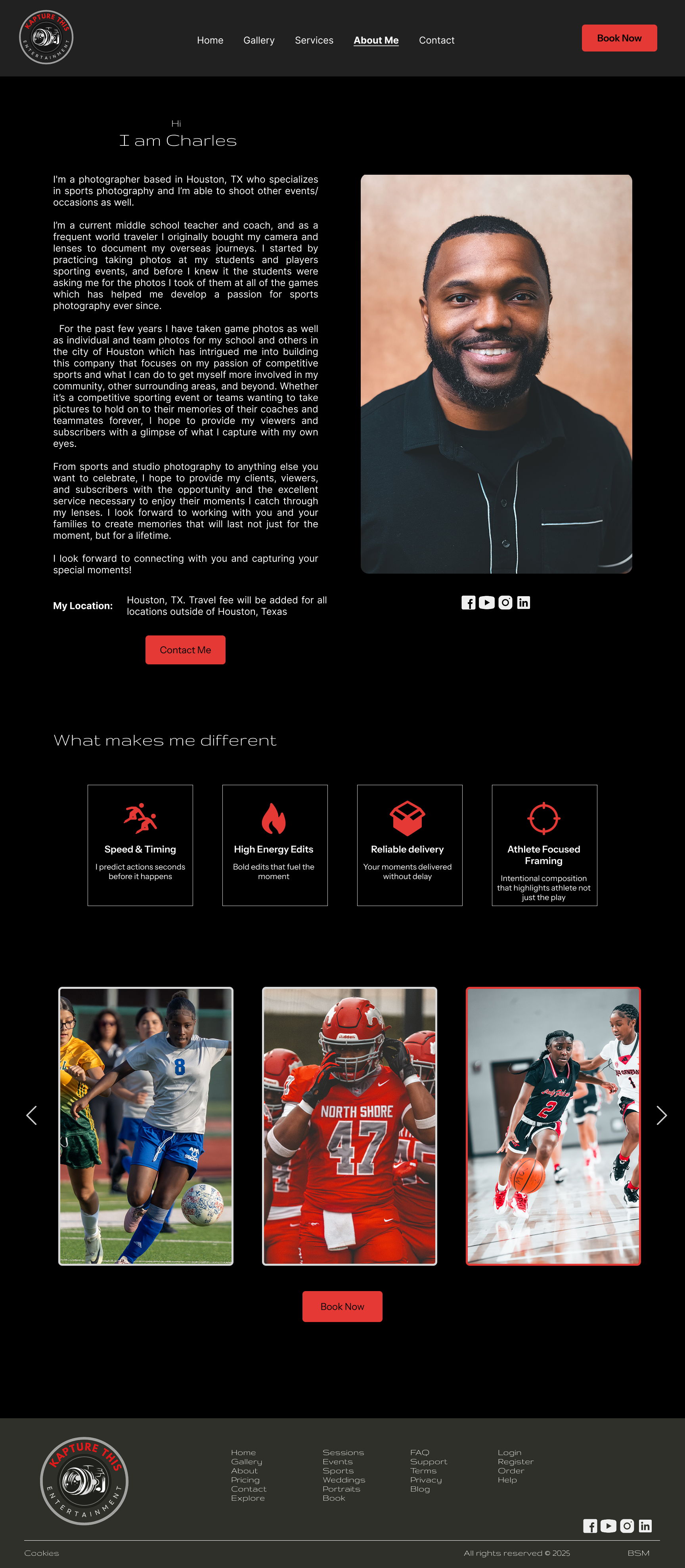
The Design
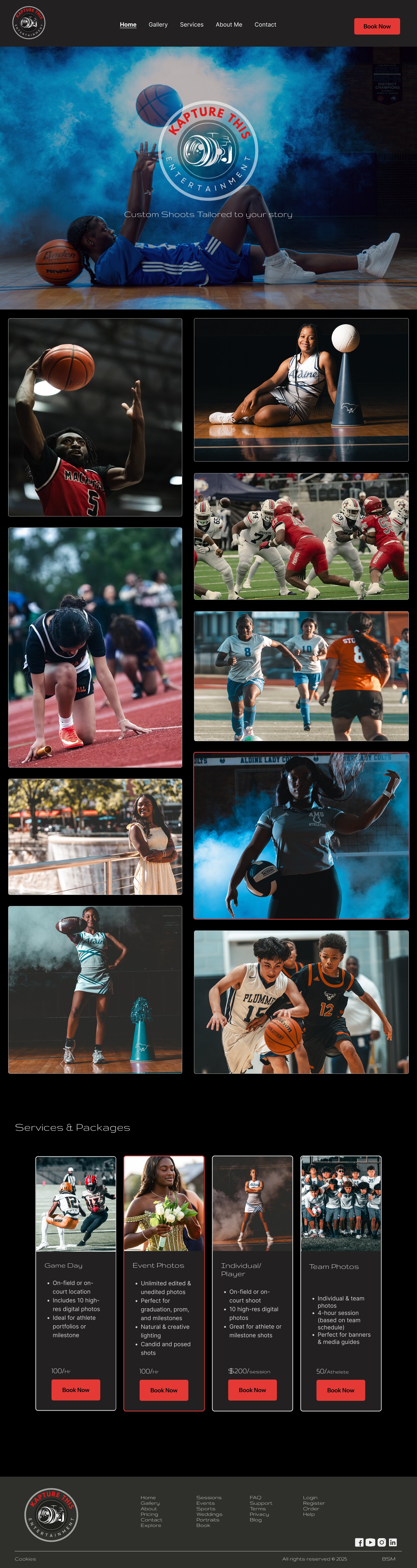
Conclusion
The website was designed and built in Webflow using a mobile-first approach, prioritizing fast-loading portfolios and clear navigation. Key insights guided the inclusion of clear services, pricing, booking flow, and trust elements to improve conversions. The final product was successfully delivered to the client.
Next Step
The next step is to improve the website’s overall performance and user experience by conducting a usability study. This evaluation will help identify navigation issues, accessibility gaps, and friction points in interactions. Insights from user feedback will be used to refine layouts, optimize content hierarchy, enhance accessibility, and improve load performance.